Software development team structure, what is right for you
28 November 2022 | Noor Khan



The structure of a software development team will play a significant role in the success of a project. Every team member has their part to play and if there is not an effective structure in place, the project could face complexities and challenges. According to Standish Group’s 2020 CHAOS report, around 66% of software projects fail. The reasons vary however that is a staggering number. One way to avoid this is by ensuring the right software development team structure for your business goals and end product requirements.
Here we will look at the multiple software development team structure approaches so you can find the right approach for your project.
The generalist structure
The generalist structure consists of team members having a broad level of skills, expertise and experience in multiple software development fields. However, they do not possess any specialist skills that may be required to gain a deeper understanding to inform a better overall end product.
The pros of generalist structure
- The team are aware of all aspect of software development; therefore, they know the product on a surface level.
- Each member can carry out their relative tasks without dependency on others.
The cons of the generalist structure
- Lack of specialist skills means there are no deep expertise within the team which can mean there may be blind spots that the team misses whether that is with functionality or the UX.
- There may be a need to hire and onboard new members of the team to fill the skills gap, which can be time-consuming and costly.
Specialist structure
The specialist structure consists of team members who have rich specialist skills and expertise in their niche. Each member will be an expert in their field, therefore will work on their specified area. This is often the structure most software development teams will opt for to build a high-performing software product.
The pros of the specialist structure
- Skills to build a high-performance and quality software product
- Highly level of knowledge and expertise
The cons of the specialist structure
- There may be a lack of collaboration as each member may work independently
- Lack of communication between team members could pose challenges with gaps
Hybrid team structure
The hybrid software development team as you can guess is a mixture of both a generalist and specialist team structure. This is often the most effective in building a high-performing software development team that can build software to meet organisation goals and requirements.
The pros of a hybrid team structure
- Best of both worlds with broad software skills and specialist skills
- Can fill any gaps presented by the other two structures
- A better, high-quality end product
The cons of a hybrid team structure
- Can be costly to build this team structure
- Communication can be a challenge with multiple approaches to what works best
Ardent software engineering teams
Our expert software engineers with decades of experience are well-trained in world-leading software technologies as such Angular, Python, .Net, Rails, Flutter, Xamarin, React and much more. If you are looking for a team to come on board to help bring your vision to life, we can help. Whether you need an additional resource to complement your in-house existing skills or need a team to deliver the entire software, we can accommodate your needs. Get in touch to find out more or explore our software engineering team service.
The ardent software engineering teams can assist with all three software development team structures:
- The generalist structure – you have the product knowledge, and we have the software engineers that have expertise in numerous niches and fields within software development.
- The specialist structure – Our software engineers are well versed in delivering a wide variety of projects with the core components in mind; communication, timelines and budget.
- Hybrid team structure – We can bring the expertise to your existing knowledge to deliver a premium quality end product in a cost and time-efficient way.
Ardent Insights

Which Platforms Are Ahead in AI-Ready Data Pipelines?
At Ardent, we have spent years helping organisations design, modernise and operate the data foundations behind critical reporting, analytics and decision-making. That experience gives us a clear view of what now separates AI-ready businesses from those still struggling to get value from their data. It is not the amount of data they hold, or even [...]
Read More... from Software development team structure, what is right for you

Making Your Existing Data Pipelines AI-Ready
From Stable Infrastructure to Adaptive Intelligence Most organisations do not need more data. They need their existing data to work better. At Ardent, we spend a significant amount of time inside large-scale client data platforms that are already mature, operational, and delivering value. These are not greenfield environments. They are complex ecosystems built over years, [...]
Read More... from Software development team structure, what is right for you
AI-Powered ETL in Amazon Redshift
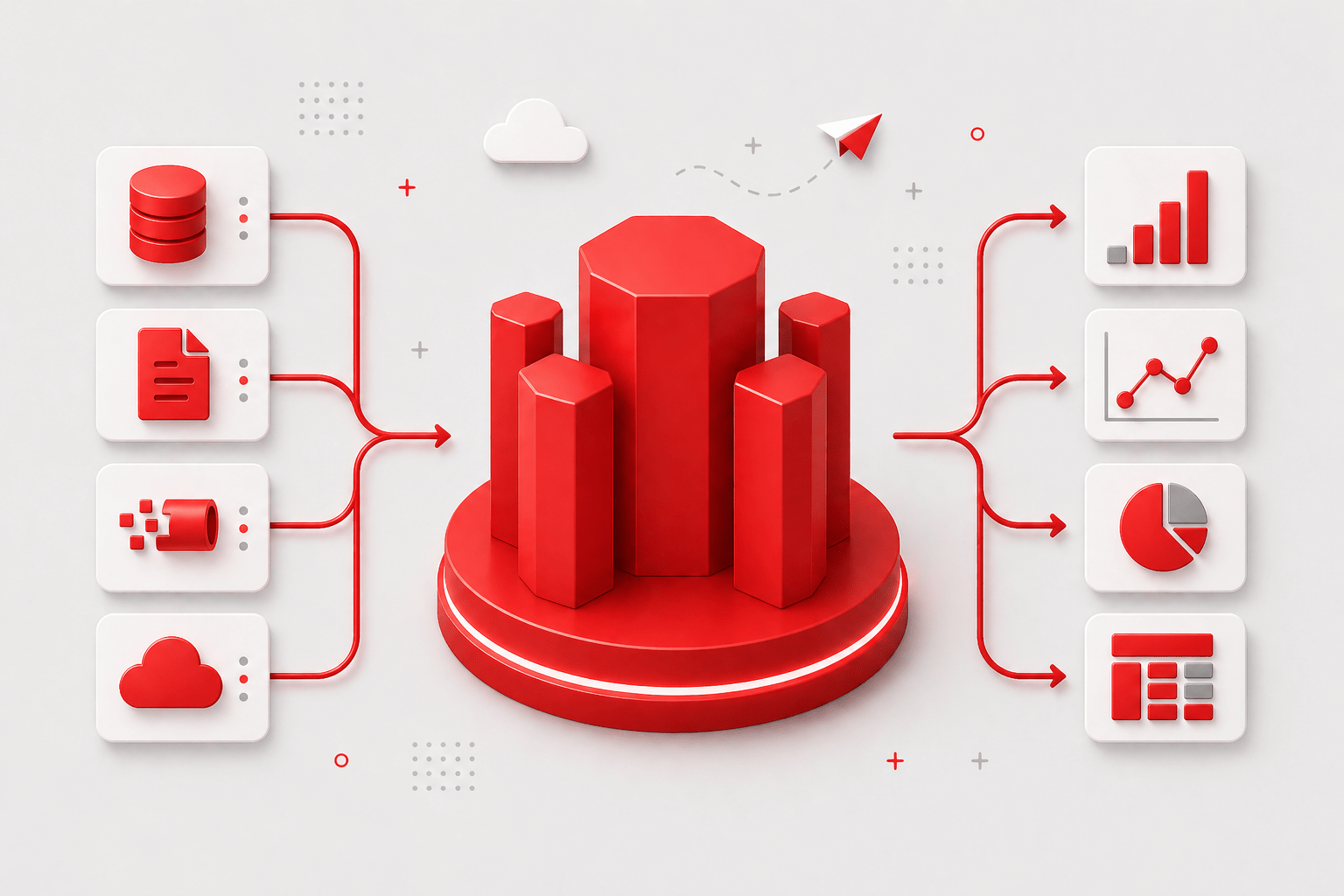
When the Warehouse Starts Doing the Work In our previous piece, we explored how ETL (Extract, Transform, and Load) is evolving into adaptive, intelligent systems. In Redshift environments, we are now seeing what that shift looks like in practice. For most of its life, Amazon Redshift has been treated as the final step in the [...]
Read More... from Software development team structure, what is right for you
Services
About
UK
US
India

