How does a data warehouse, database, data mart and data lake work together?
6 February 2023 | Noor Khan


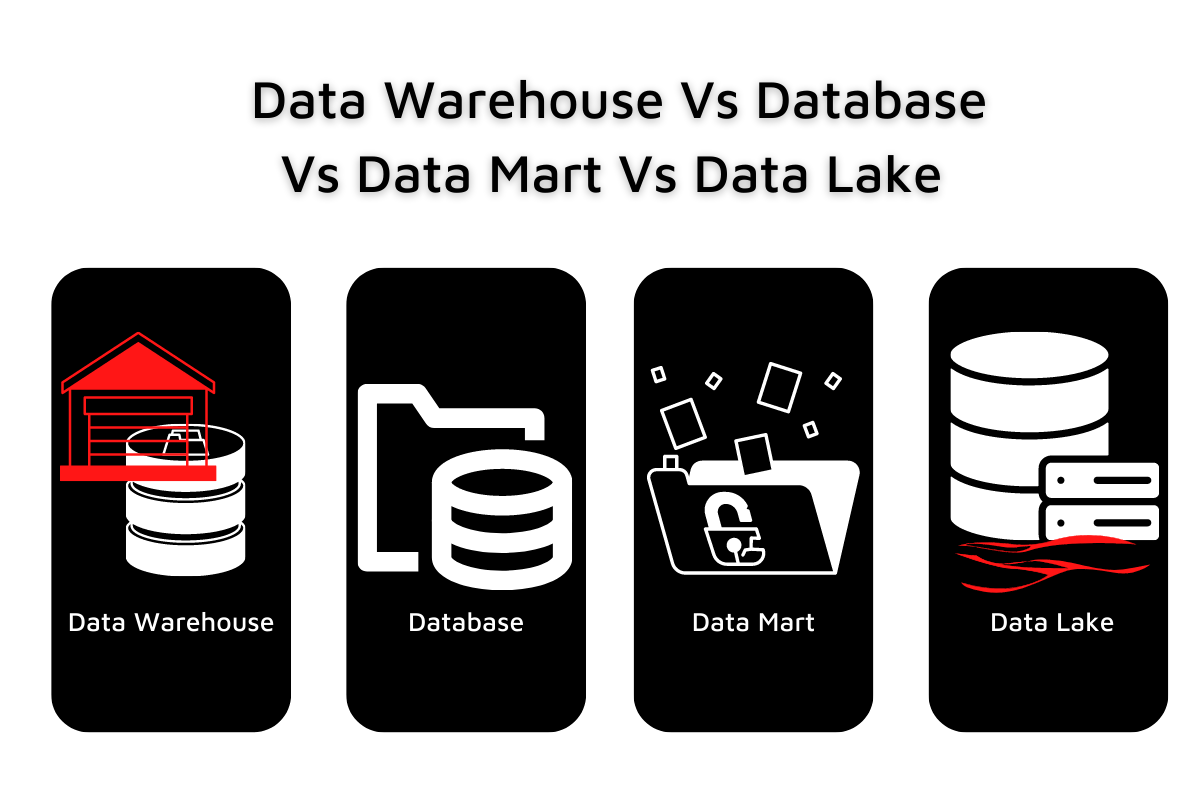
Every organisation's data will be unique, therefore they will require a data storage solution that is the right fit for their organisation. There are multiple options which include a data warehouse, database, data mart and data lake. Each serves a different purpose and can be used together in a connected data ecosystem or independently to host an organisation's data. In this article, we will look at how each of these works and how they can be used collectively.
What is a data warehouse?
A data warehouse is a central repository for an organisation's data that enables and supports Business Intelligence (BI). A data warehouse will ‘house’ data that has been collected from many disparate sources through the ETL (Extract Transform Load) process. The data sources can range from databases, apps, Saas products and more. It can provide invaluable benefits such as fats queries, insights to drive BI, provide a single source of truth and more.
Learn more about data warehousing with our essential guide
What is a database?
A database is a data storage system which stores organised data which is typically accessed electronically. There are multiple types of databases and Database Management Systems such as relational, object-oriented, hierarchical and network. Some of the leading database technologies include MySQL, SQL Server, MongoDB, Oracle Database and PostgreSQL which all offer a unique set of benefits and limitations. Databases are used for several reasons to store data, insights from analysing data stored, keeping track of customers and storing sensitive data.
What is a data mart?
A data mart is a subject-orientated database that is specifically used within data warehouses. For example, if an organisation houses their entire data in a data warehouse, a data mart will store data based on specific subjects, whether that is by departments such as sales and marketing or on specific customer segments. Data marts improve the accessibility of subject-specific data in terms of both speed and efficiency.
What is a data lake?
A data lake is a data storage architecture used to store raw, unstructured data such as real-time social media data. Data lakes will typically be much larger compared to data marts, databases and data warehouses. The data stored in a data lake typically follows the ELT (Extract Load Transform) structure, whereby data is extracted from the source, loaded into the data lake, and will be transformed and processed when that data is required. A typical use case for a data lake is when businesses want to understand their brand position and public opinion through social media data. Here data scientists gain employ sentiment analysis to gain those insights.
How do a data warehouse and a database work together?
A data warehouse may house the data straight from a specific database. For example, if they want to collect data from one of their apps, the app will have its own database. Therefore, when the data is collected from the app database and loaded into a data warehouse, they will directly work together to offer a bigger picture to the organisation.
How do a data warehouse and a data mart work together?
A data mart holds the subset of data with a data warehouse. Essentially data marts are part of the data warehouse architecture as they enable a data warehouse to be organised, structured and improve accessibility.
How to does a data warehouse and a data lake work together?
A data warehouse and a data lake may not necessarily work together directly. However, an organisation may employ both for the multiple types of data they collect and store. For example, a market research company may collect survey and social media data and store it in a data lake for commercial benefit. However, they may also have a data warehouse infrastructure for their internal business data.
Find out the key differences between a data warehouse and a data lake.
Ardent data engineering services
We have worked on a wide variety of projects for clients hailing from a range of industries including healthcare, manufacturing and logistics. We have helped clients find the right type of data storage solution including data warehouses, databases, data marts and data lakes to fulfil their unique requirements. Explore our customer success stories on how they were able to improve their data performance, reduce overall costs and gain powerful insights:
- Ensuring data accessibility, availability and optimised performance with expert operational monitoring and support
- Building robust, scalable data pipelines with AWS infrastructure to mitigate data delays and gaps
- Efficient, automated data processing infrastructure with speedy data query time
If you are looking to work with an experienced data engineering company, then we can help. Get in touch to find out more to unlock the potential of your data.
Ardent Insights

Which Platforms Are Ahead in AI-Ready Data Pipelines?
At Ardent, we have spent years helping organisations design, modernise and operate the data foundations behind critical reporting, analytics and decision-making. That experience gives us a clear view of what now separates AI-ready businesses from those still struggling to get value from their data. It is not the amount of data they hold, or even [...]
Read More... from How does a data warehouse, database, data mart and data lake work together?

Making Your Existing Data Pipelines AI-Ready
From Stable Infrastructure to Adaptive Intelligence Most organisations do not need more data. They need their existing data to work better. At Ardent, we spend a significant amount of time inside large-scale client data platforms that are already mature, operational, and delivering value. These are not greenfield environments. They are complex ecosystems built over years, [...]
Read More... from How does a data warehouse, database, data mart and data lake work together?
AI-Powered ETL in Amazon Redshift
When the Warehouse Starts Doing the Work In our previous piece, we explored how ETL (Extract, Transform, and Load) is evolving into adaptive, intelligent systems. In Redshift environments, we are now seeing what that shift looks like in practice. For most of its life, Amazon Redshift has been treated as the final step in the [...]
Read More... from How does a data warehouse, database, data mart and data lake work together?
Services
About
UK
US
India

