How to implement DataOps for increased agility
16 March 2023 | Noor Khan


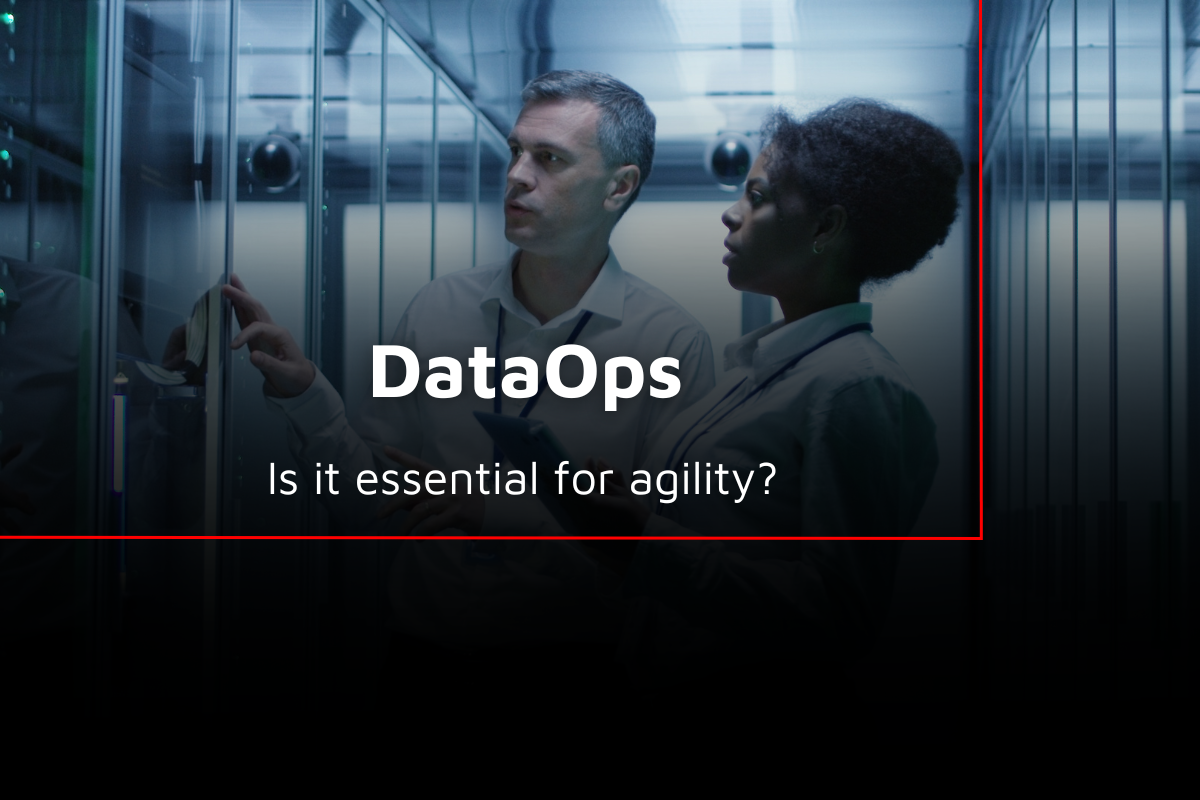
With the increasing need for real-time and predictive data analytics, DataOps is one of the key trends in Data Engineering in 2023. In this article we will cover how you can implement DataOps for increased agility, moving away from traditional, rigid practices.
What is DataOps?
Adopting the methods originated from Agile software development and DevOps, DataOps is a collection of practices, processes, tools and technologies used for data management, monitoring and operations. The approach focuses on improving efficiencies, speeding up data turnaround and reducing overall costs with automation, collaboration and communication at its core. There are invaluable benefits to be gained, however, it can be challenging to implement which we will discuss with tips on how to overcome them.
The principles of DataOps
As DataOps has derived from DevOps, there are some core principles which are at the foundation of the practice and they include the following:
- Provide highly satisfactory service to clients continuously and consistently with a priority on a reliable and swift data turnaround.
- Collaboration with daily communications with teams and stakeholders.
- Embrace the evolution of customer demands and requirements with a customer-centric approach by investing in continuous investment and learning of new technologies.
- Reflect and optimise with a focus on continuous improvement of processes, systems and tools.
- Adopt automation to drive efficiencies across all data operations.
Key benefits of DataOps
There are multiple benefits of DataOps and they include:
- Unified data – Data spread across disparate cloud sources can be accessed via dedicated APIs, removing the need to move the data.
- Faster access to data analytics – With the need for quick access and insights into data as the driving factor for the DataOps methodology, it is a core principle
- Democratization of data – Another key trend for data engineering in 2023, DataOps supports the democratization of data
- Facilitates collaboration – To remove inefficiencies and streamline data processes for a faster turnaround on data with collaboration across data teams.
- Automation – With automated processes involved in data ingestion, warehousing and processes. This enables businesses can benefit from saving time and resources, consequently saving on costs. Additionally, room for human error is mitigated.
- Improve data governance – Many organisations still find it a challenge to implement robust data governance practices to protect their data. With automation, data governance processes can be automated across the entire pipeline to improve security.
Challenges with implementing DataOps and how to overcome them
There may be many barriers to implementing DataOps, below we will cover them and how you can overcome them:
- Resistance to change – DataOps requires a mindset and culture shift, this will more than likely be met with resistance from all levels. This can be overcome with the focus on the prime benefits which save costs and resources across the business and increase efficiencies to alleviate manual tasks such as managing data pipelines.
- Technical investment – DataOps will require investment in integration technologies such as Data form which provides a framework to manage a variety of data warehousing technologies including the likes of Amazon Redshift, Snowflake and Google Big Query. To overcome them, you may consider outsourcing DataOps to avoid licensing fees for technologies not already within your tech stack.
- Finding the place to start – DataOps can be challenging to implement because it can be difficult to establish a starting point. To get started effectively, organisations need to reflect on their goals and ambitions when it comes to data. Then pilot DataOps in a specific area, measure success and then deploy slowly across all data areas.
- Understanding DataOps – DataOps is still a relatively new methodology which has been around since 2014. However, it’s still not a common practice with only around 41% of organisations successfully implementing according to Immuta.
Implement DataOps with Ardent
At Ardent, we have inhabited some of the core principles of DataOps including automation and communication. We work with our clients in collaboration to improve and optimise their data on an ongoing basis. If you are looking to:
- Improve your data infrastructure
- Optimise your data performance
- Implement robust data governance
We can help. Our leading data engineers can come on board to help you unlock the potential of your data. Get in touch to find out more, or explore our managed services.
Explore how our clients are succeeding with their data:
- Ensuring data availability with expert operational monitoring and support
- Improving data turnaround by 80% with Databricks
Ardent Insights

Which Platforms Are Ahead in AI-Ready Data Pipelines?
At Ardent, we have spent years helping organisations design, modernise and operate the data foundations behind critical reporting, analytics and decision-making. That experience gives us a clear view of what now separates AI-ready businesses from those still struggling to get value from their data. It is not the amount of data they hold, or even [...]
Read More... from How to implement DataOps for increased agility

Making Your Existing Data Pipelines AI-Ready
From Stable Infrastructure to Adaptive Intelligence Most organisations do not need more data. They need their existing data to work better. At Ardent, we spend a significant amount of time inside large-scale client data platforms that are already mature, operational, and delivering value. These are not greenfield environments. They are complex ecosystems built over years, [...]
Read More... from How to implement DataOps for increased agility
AI-Powered ETL in Amazon Redshift
When the Warehouse Starts Doing the Work In our previous piece, we explored how ETL (Extract, Transform, and Load) is evolving into adaptive, intelligent systems. In Redshift environments, we are now seeing what that shift looks like in practice. For most of its life, Amazon Redshift has been treated as the final step in the [...]
Read More... from How to implement DataOps for increased agility
Services
About
UK
US
India

